Is Restructuring Necessary for Better Electricity Management?
Urban India runs on ageing wiring and rising peak demand. Full electrical restructuring is often impractical—retrofit visibility and control with Enmate can deliver better electricity management without rewiring.
Apr 10, 2026
Table of contents
Introduction — urban shift and old infrastructure
Key electrical problems
Limits of traditional solutions
The smarter approach: Enmate (what it is, how it works, advantages)
Case studies, use cases, and conclusion
Introduction — urban shift and old infrastructure
Hero product: Enmate (retrofit energy monitoring + control)
Product page: Enmate | Enlog (retrofit, switchboard-mountable, single-phase monitoring + control).
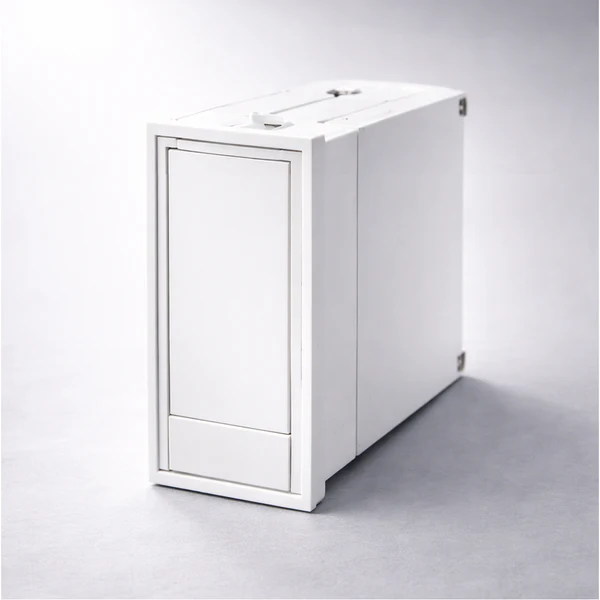
Enmate is built for the exact reality of many Indian buildings: legacy wiring, limited circuit documentation, and a need for room- or circuit-level visibility without expensive restructuring.
With India rapidly urbanising, metro cities like Delhi and Mumbai have become dense hubs of residential and commercial activity. As per government survey data (PLFS 2020–21), over 34% of India's population lives in urban areas, with migration largely driven by work and education opportunities.
However, while demand has evolved, infrastructure has not always kept pace. According to multiple government-backed assessments and budget discourse, a large share of urban buildings in major cities were built before modern energy demands, making them poorly suited for today's high-load usage patterns.
At the same time, electricity demand is rising sharply. As per the Ministry of Power, India's peak power demand has grown substantially, driven by air conditioners, appliances, EVs, and expanding commercial spaces. See Ministry of Power (India) for official updates and statistics.
This creates a clear mismatch: old infrastructure and new-age electricity demand. Buildings that were never designed for high-density consumption, real-time monitoring, or energy optimisation are now under constant stress.
Is restructuring necessary to manage electricity efficiently, or is there a smarter way to adapt?
Key electrical problems
Electricity demand is growing fast, and supply alone cannot keep up—so optimisation is necessary, not optional. To optimise, we first need to see where problems actually lie.
For most buildings, especially in fast-paced metro cities, complete restructuring is not practical due to time, cost, and operational constraints. Modern solutions are needed, but existing infrastructure often holds them back.
Wiring chaos
In many older buildings, wiring has evolved without structure. Multiple electricians have made changes without proper documentation, leading to:
Looped wiring across rooms or distribution panels
Mixed connections between appliances, spaces, or rooms
No clear mapping of circuits or a standard wiring pattern
That makes it hard to deploy smart meters or automation in a clean, documented way.
Load and safety concerns
Even when systems are patched, they may run beyond safe limits:
Overloaded MCBs and distribution boards
Frequent power cuts and voltage fluctuations
Higher risk of short circuits and fire hazards
These issues affect bills, safety, and appliance life—not just monthly costs.
Poor infrastructure design
Older buildings were often not designed for today's needs:
No room-wise circuiting
Centralised wiring with limited modularity
Poorly placed distribution boards
Without modularity, control and monitoring become much harder.
Manual dependency on electricians
Fault finding often means trial and error, manual tracing of loops, and dependence on whoever knows the property best. Without documentation, every issue is a fresh puzzle.
Data and accuracy issues
Without accurate data there is no real visibility of consumption, more room for billing disputes, and no reliable way to track usage at room or appliance level. Optimisation without data is guesswork.
Decoding the root cause
Together, these problems point to one core issue: unstructured legacy infrastructure with no data visibility. Restructuring might help in theory, but it is high cost, time-consuming, and often requires halting operations—unrealistic for many owners, especially in rental or PG setups.
Limits of traditional solutions
Common measures—LED lighting, better AC habits, HVAC tuning, sealing leaks, and other low-cost fixes—do help, but only up to a point. They improve surface-level efficiency without fixing wiring complexity, lack of control, or poor visibility of consumption.
What is needed is something that works with existing wiring, adapts to real conditions, and improves efficiency without forcing a full rebuild or endless manual effort.
The need for a smarter approach
Modern buildings need adaptability: work with existing infrastructure, avoid full restructuring, and still deliver real-time visibility and control. That is where retrofit smart metering and monitoring—such as Enmate—comes in.
Enmate: retrofit smart energy management
Enmate fits into existing infrastructure and helps manage demand more intelligently. For property owners in metro cities—especially PGs and co-living—it is a practical way to improve electricity management without stopping operations.
Prepaid or submetering projects can stall in old buildings because of wiring complexity, mapping effort, and electrician dependency. Enmate is designed to reduce those barriers: a compact, retrofit path to smarter management without structural change.
What is Enmate?
Enmate is a single-phase, retrofit smart energy device for real-time monitoring and control without replacing your building's core electrical layout. It is built for environments where traditional rollouts are painful—especially old buildings with mixed or looped wiring.
Instead of rebuilding infrastructure, it works on top of it. It can be applied at room level, appliance level, or at MCB / switch points—so you get visibility where decisions actually happen.
How it works and key advantages
Enmate brings intelligence into the system by:
Tracking electricity usage in real time
Supporting remote monitoring and control where deployed
Mapping consumption more accurately to rooms or loads
Even with mixed or looped wiring, retrofit metering can improve attribution and visibility compared to a single bulk meter—without a full rewire.
Key advantages include:
No full rewiring or building-wide restructuring required
Plug-and-play style installation at MCB, switch, or appliance level
Compact hardware with a premium finish
Easier mapping in difficult wiring setups
Lower electrician dependency for day-to-day insight
Fast telemetry (e.g. ~15s data) for timely decisions
Avoids heavy upfront capex of a full electrical redesign
For higher three-phase loads, Enlog's enterprise line (e.g. EnPro) extends the same philosophy to heavier feeders and commercial panels.
Case studies
Enlog is deployed across hospitality, flex workspaces, retail, and shared living. Published examples include strong bill reductions and fewer breakdowns—for instance, major hotel and flex-office rollouts with double-digit percentage savings when monitoring and optimisation are applied consistently.
Explore products and solutions on the main site for detailed case references and contact options.
Learn more: Enmate product · Energy saving solutions
Use cases and conclusion
Enmate is versatile anywhere electricity is shared or hard to attribute: hotels (appliance and zone efficiency), hostels / PGs / co-living (sub-metering and fair billing), households, and commercial spaces such as offices, retail, and malls.
Restructuring is not always the answer—and for many old buildings, it is not practical. The real need is to adapt existing systems while improving efficiency. Enmate offers a single, efficient retrofit path: better electricity management without rebuilding the property.
You do not need to rebuild your property to fix electricity problems—you need to understand and control usage better.